

0.00 грн.
Checkout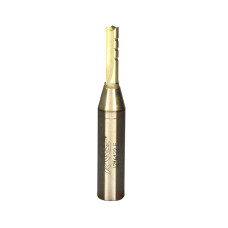

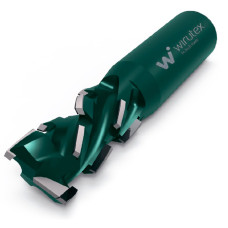
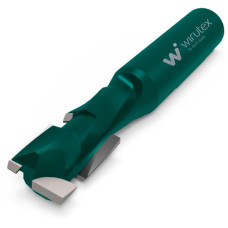
Router Bits: Precision, Clean Processing, and Cutting Stability in Professional Production
Router bits are one of the basic and most frequently used tools in woodworking, composite milling, and CNC machine operations. They are designed for precise groove forming, surface leveling, trimming, edge processing, chamfering, and creating complex contours. Due to their versatility and high productivity, router bits are used in both mass furniture production and individual part manufacturing.
The MWM-Dnipro catalog features bits from leading global brands — KWS, Ital Trade, Wirutex, G3 Fantacci, and other manufacturers specializing in tools for professional woodworking. The assortment includes models with carbide inserts (HM), solid bits, as well as highly economical and durable polycrystalline diamond (PCD) bits.
Purpose and Applications of Router Bits
Router bits are used for a multitude of operations: milling MDF, chipboard, plywood, solid wood, plastic, and composite materials. Depending on the design and number of teeth, the tool can perform both rough and finish processing, ensuring a smooth surface without chips.
Router bits are especially important in the production of facades, doors, panels, decorative elements, cabinet furniture, and parts with precise geometric parameters. They allow for processing materials at the end, making cutouts, cutting grooves and slots, as well as working in deep processing zones.
Design and Differences of Various Types of Router Bits
A router bit consists of a shank, a working part, and cutting edges located along the axis. The tool geometry significantly affects processing quality, chip removal direction, and tool behavior under load.
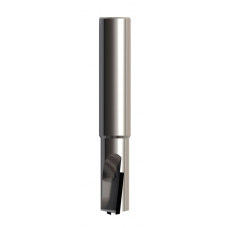
Router bits can have a different number of teeth — from single-tooth for aggressive cutting and high feed rates, to multi-blade bits intended for a clean pass. Single-tooth models are often used for deep milling of composite materials or MDF, providing effective chip removal. Bits with two or three blades provide a uniform load and are suitable for most standard furniture production operations. For maximum tool life and precision, PCD router bits are used — polycrystalline diamond tools that demonstrate durability dozens of times higher than carbide equivalents.
Manufacturing Materials of Router Bits and Their Properties
The most common types of materials for router bits are carbide (HM) and polycrystalline diamond (PCD).
Carbide router bits have an optimal price-to-durability ratio, suitable for general and specialized production tasks, work at high speeds, and are resistant to loads during the processing of MDF, chipboard, plywood, and solid wood.
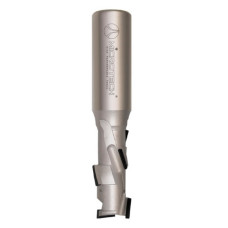
PCD router bits, featured in the Wirutex and Ital Trade catalogs, are designed for long operation without dulling and provide flawless edge cleanliness. They are ideal for mass facade production, parts made of HPL, materials with high abrasiveness, or intensive serial processing.
Large Categories of Bits in the MWM-Dnipro Catalog
Since the range of router bits is very diverse, it covers dozens of tool types for various tasks.
The assortment of router bits includes:
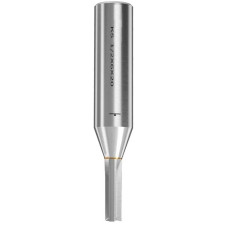
straight HM bits for general operations, slotting, and trimming;
PCD router bits with increased wear resistance for professional CNC production;
spiralled bits for stable chip removal during deep processing;
single-tooth bits for MDF and composites working at high feed rates;
bits with axial cutting to reduce the risk of surface chipping;
models with increased cutting part length for deep grooves;
bits with different numbers of Z — for rough, finish, and universal milling;
professional diamond bits for mass production lines;
tools from KWS, Ital Trade, Wirutex, G3 Fantacci, and other manufacturers.
Advantages of Using High-Quality Router Bits
Router bits ensure geometric precision, stability of tool and part movement, and allow maintaining high production speeds. With correctly selected tools, the risk of burns, chips, and material peeling is reduced, while tool replacement costs are significantly lowered.
Router bits made of quality carbide or PCD inserts have a uniform load distribution along the cutting edge, work smoothly, and maintain processing precision for a long time. This is especially important in facade production, where any defect is noticeable on the finished product.
How to Choose a Router Bit
To select the correct bit, it is necessary to consider the part material, machine power, spindle diameter, and required surface quality. For MDF and chipboard, two- and three-tooth bits are well-suited, while for composites or abrasive materials, it is advisable to use PCD bits. For facade milling, tools with axial cutting are best, reducing the risk of chipping on the entry edge.
Order Router Bits at MWM-Dnipro
Our catalog offers over 200 models of router bits of various sizes, designs, and materials. We offer only professional tools for CNC, woodworking machines, and production lines.
Place your order online or contact a manager — we will help pick the bit for your production format, materials, and operation type.